Deputy Minister Dora Yankova: We are importing into the EU a first version of the draft National Building Renovation Plan 2050.
Deputy Minister Dora Yankova: We are importing into the EU a first version of the draft National Building Reno
By Ministry of Regional Development and Public Works
e3f77b64c01052eed1ebffb07b9195d6.jpg)
The state with the ambition to renovate over one million single-family and multi-family residential buildings
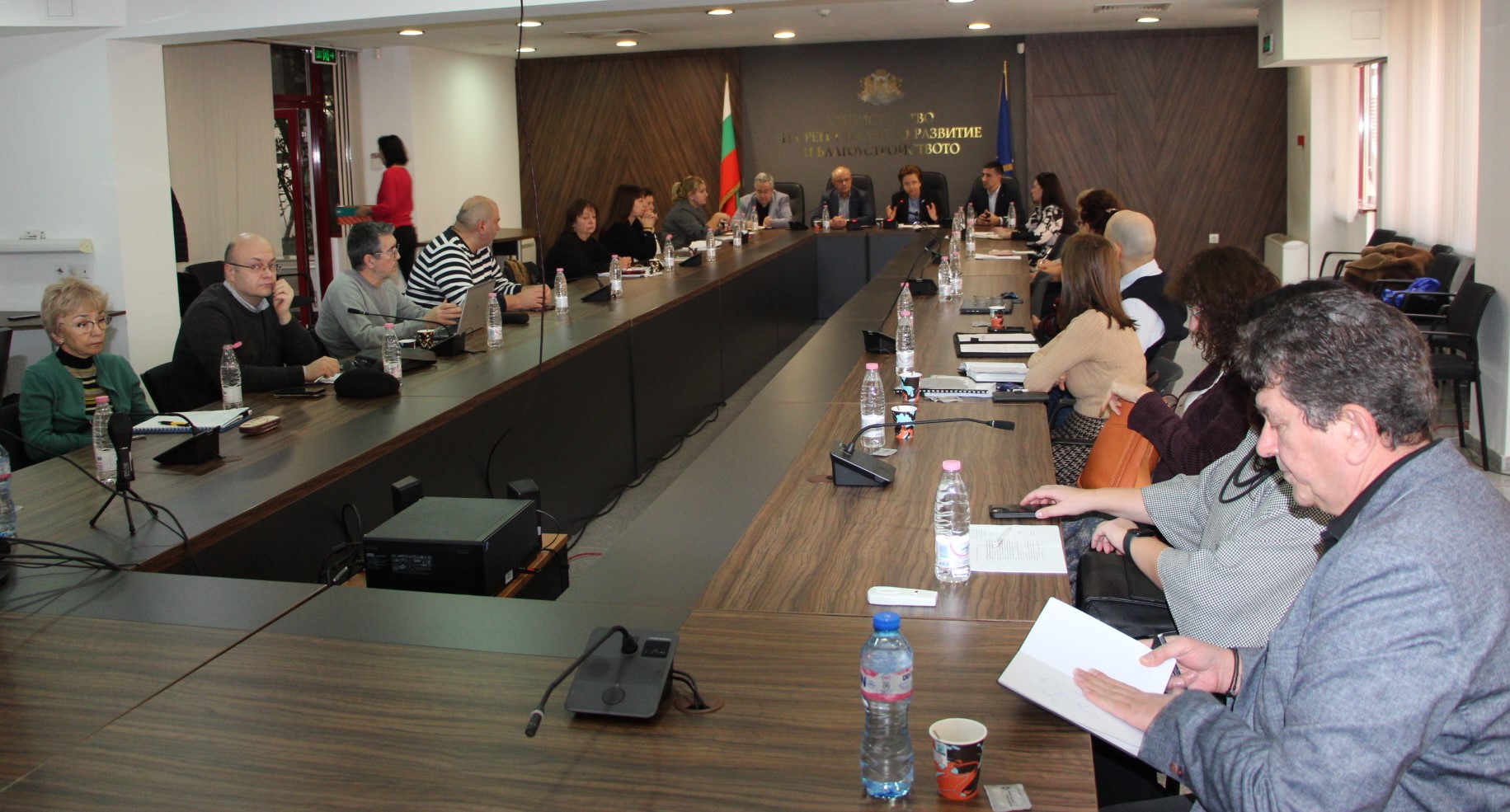
By the end of the year, our country will submit to the European Commission a first version of the draft National Building Renovation Plan to ensure the renovation of the national stock of residential and non-residential buildings with the aim of achieving a highly efficient and decarbonised building stock by 2050. This was announced by the Deputy Minister of Regional Development and Public Works Dora Yankova, who chairs the interdepartmental working group working on the development of the plan to transform existing buildings into zero-emission buildings.
"Our ambition is to have an approved national plan by the end of next year, including all the policies we need related to the modernization of buildings, the protection of the environment, the improvement of people's quality of life and the improvement of the country's economy," said Yankova. She stressed that the initial project was only a framework for the large-scale programme. The national plan itself will detail all requirements, measures, the role of the different actors in the process, financial sources, conditions and all other parameters.
Ivaylo Alexiev, Executive Director of the Agency for Sustainable Energy Development and Vice-Chair of the Working Group, noted that it is proposed that the large-scale renovation of buildings in Bulgaria should take place in two horizons – by 2030-2035 and 2040-2050. He stressed that the ambition is to involve as many stakeholders as possible in the plan – citizens, state and local institutions, the construction sector and individual industry organisations, as well as the banking sector, which has an interest in energy renovation programmes.
“We are currently renovating around 1% of the available building stock per year. In order to meet the requirements of the European Commission, we need to renovate between 2% and 3% of the identified buildings every year, "said Alexiev.
The first version of the plan was based on analyses by the Bulgarian-Austrian Consulting Company (BACK) and the EnEffect Energy Efficiency Centre, which analysed the available data from the Geodesy, Cartography and Cadastre Agency, the National Statistical Institute, the Agency for Sustainable Energy Development, etc.
Tsveta Nanyova from BACK presented an analysis of the existing housing stock in Bulgaria. According to him, to date, there are 1 165 998 buildings in the country with 3 312 056 dwellings with a built-up area of nearly 290 million square meters. Of these, just over 1 million are single-family buildings with more than 1.3 million dwellings. Almost 83,000 are multi-family buildings with almost 2 million dwellings. According to Nanyova, over the past five years there has been a decline in the number of occupied single-family buildings by nearly 200,000 at the expense of multi-family buildings, which represent new construction in cities.
According to the experts' assessment, nearly 980,000 single-family homes, as well as 82,136 multi-family buildings, are subject to renovation. ‘This is about residential buildings with a total area of just over 277 million m2,’ summed up Nanyova.
At present, 3022 buildings have been renovated with European and budgetary funds. With the resource currently provided, it is expected that by 2030 there will be about 2000 more. The analysis shows that some households have taken energy efficiency measures on their own. Thus, 49% of all inhabited dwellings in the country have replaced windows, and nearly 28% have completed thermal insulation on the external walls.
Nanyova also noted that the most expensive for renovation are single-family buildings, as 30% of the resource goes to the replacement of old pitched roofs. At the same time, relatively few people live there – the 2021 census figures show an average of 2.4 per cent. Multi-family buildings are the most important for the energy profile of the country because they cover 50% of the occupied area, 60% of the dwellings and have the highest potential for energy savings.
Kamen Simeonov from EnEffect presented interim data from the analysis of the non-residential building stock, which includes public institutions such as schools, administrations, etc., as well as industrial enterprises. To date, estimates indicate a need to renovate 129 million square meters of area.
During the working group meeting, a number of topics were discussed, such as the adoption of an energy poverty plan, the requirements for the structural sustainability of buildings, the problem of unoccupied buildings, etc. The aim is to ensure effective participation of the public and stakeholders at the initial stage of drafting the National Building Renovation Plan, in accordance with the requirements of Article 3(4) of Directive (EU) 2024/1275.