Minister Nikolay Naydenov: We are making significant efforts to compensate for delays in the implementation of the 2021-2027 Regional Development Programme
Minister Nikolay Naydenov: We are making significant efforts to compensate for delays in the implementation of
By Ministry of Regional Development and Public Works
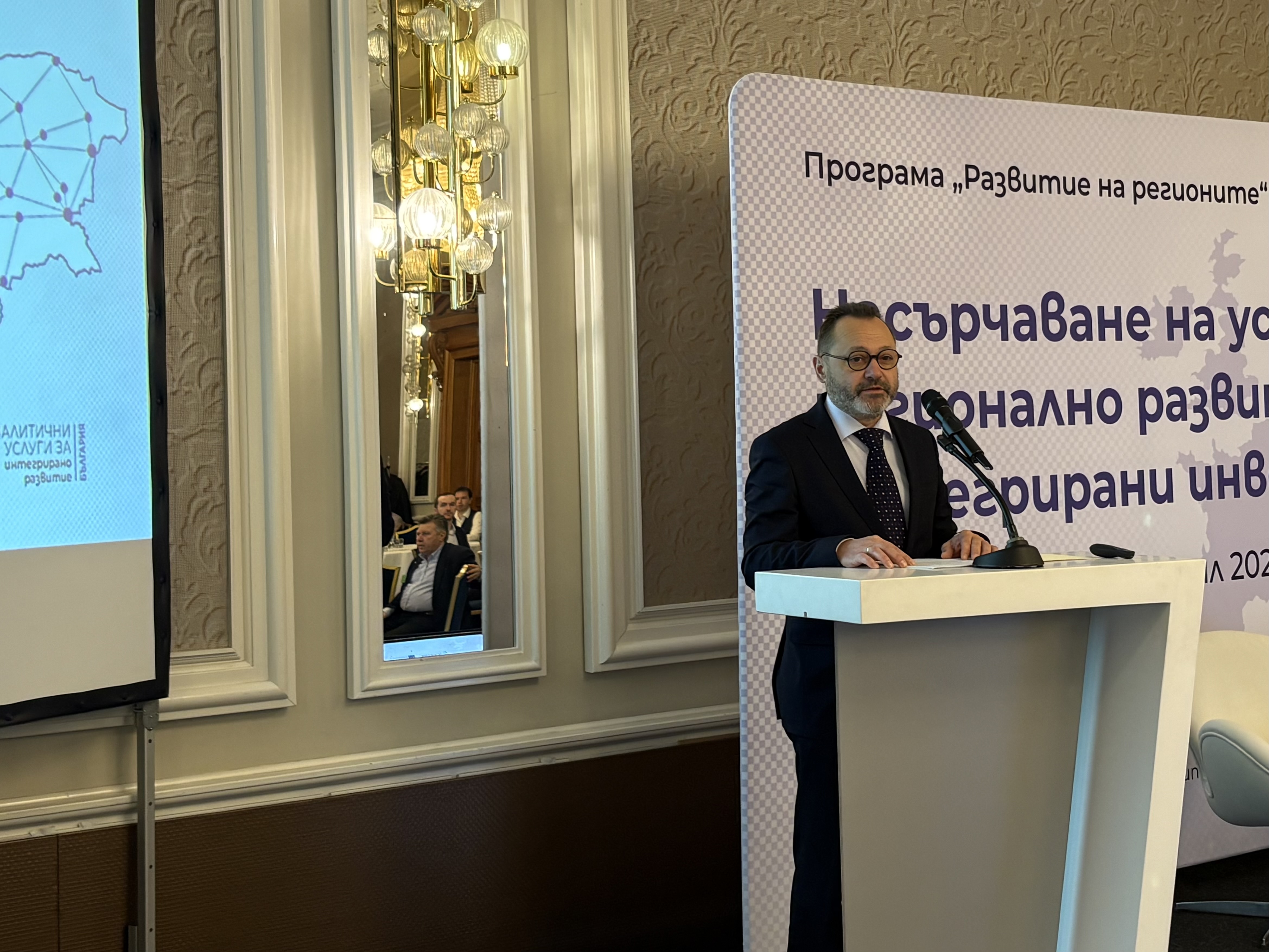

"We are making significant efforts to compensate for initial delays in the implementation of the Regional Development Programme 2021-2027 (RDP 2021-2027). The targeting of all available resources under the programme will ensure the achievement of the set objectives and the real impact on the regions of the country.” This was said by the Minister of Regional Development and Public Works Nikolay Naydenov, who opened a concluding national event on ‘Promoting sustainable regional development through integrated investments’. The forum will take into account the results of the agreement between the World Bank and the Ministry of Regional Development and Public Works to provide technical support to build the capacity of regional and local stakeholders to implement sustainable and integrated approaches to regional development. Participants include representatives of the World Bank, the European Commission, deputy ‑ ministers and experts from the state administration, mayors of municipalities, regional governors, etc. The project covers more than 120 municipalities in the country and its results will benefit around 80% of the population.
Minister Naydenov praised the approach for Integrated Territorial Investments (ITI) in the regions, which is being applied for the first time in Bulgaria. Through it, the implementation of a priority project receives funding in addition to RDP and five other European programs, which leads to the achievement of ‑ good results. Over EUR 1.8 billion are the funds for the implementation of integrated territorial investments from the RDP 2021-2027. The other programmes - Human Resources Development, Research, Innovation and Digitalisation for and Smart Transformation, Education, Innovation and Competitiveness in Enterprises and Environment - provide up to 10% of their budgets for integrated activities.
Regional Development Councils, which include representatives of local authorities and communities, play a key role in the selection and approval of projects. The MRDPW is ready to announce the application guidelines and to invite the municipalities with approved concepts for concluding contracts under the second procedure, which has a budget of nearly EUR 503 million. Thanks to integrated investments, mayors are no longer competitors for European funding, but work in partnership – projects and measures are proposed to support entire regions rather than specific municipalities.
Jörg Lakenbauer from the European Commission's Directorate-General for Regional and Urban Policy pointed out that the concept of Integrated Territorial Investments (ITI) is new to Bulgaria and is being applied for the first time in the 2021-2027 period with a budget of nearly €2 billion under the Regional Development Programme alone. "The ITI approach is relatively complex to implement. This requires good coordination between the different levels and actors and it was because of these challenges that technical assistance was needed. The World Bank team has done incredibly important work over the past few years in Bulgaria, focusing on building the capacity of local and regional stakeholders and implementing sustainable and integrated approaches to regional development," he noted.
Head of the World Bank for Bulgaria Jason Pelmar emphasized that the aim of the project team was to create measures to address economic and demographic challenges at regional and local level, as well as to promote ‑ great integration and strengthen institutional capacity for integrated territorial development. "The priorities were to enhance the quality of strategies, plans and projects, while accelerating implementation through ‑ strong partnerships and integrated approaches at regional and local level. By providing practical tools, targeted training and a platform for exchange of experience between municipalities, we have contributed to local authorities being able to learn and adapt. Survey results show that we have over 90% satisfaction with the usefulness and networking opportunities these trainings provide. The expected results of these trainings include improvement of regional knowledge, enhanced interaction between ITI partners and identification of key success factors for sustainable integrated development", he commented.
Fouad Malkawi, from the World Bank, said many localities had been visited in the country and that all stakeholders had been involved in identifying the challenges faced by some regions.
The Integrated Territorial Investment approach will continue to be applied in the next programming period 2028-2034.