Toll system becomes one of the largest providers of free spatial data
Toll system becomes one of the largest providers of free spatial data
By Ministry of Regional Development and Public Works

Real-time monitoring of traffic and meteorological conditions on the national road network
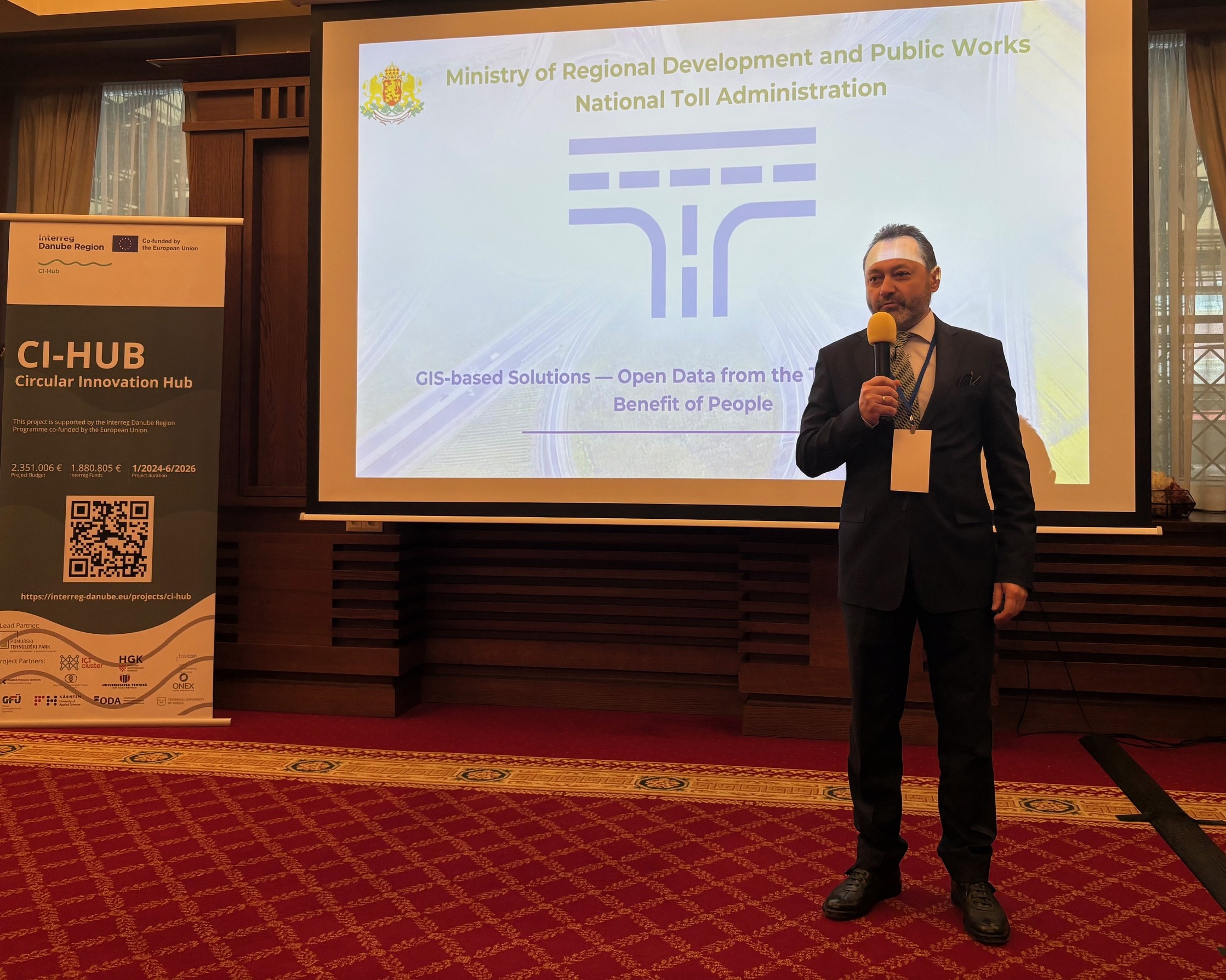
We monitor in real time the traffic on the national road network and the most current weather conditions in the country. The data is updated every 15 minutes through the cameras of the toll system. This is possible after the free access of users to various data from the system of the National Toll Administration. The new functionalities are available on the website of the National Toll Administration (www.bgtoll.bghttp://www.bgtoll.bg/). They were presented by the Minister of Regional Development and Public Works, Nikolay Naydenov, and the Director of the Department, Prof. Oleg Asenov, at the Future Cities Bulgaria 2026 international forum, which took place in Sofia.
"Fifteen years ago, Bulgaria started the process of publishing open data by public administrations. Since then, I have encouraged people and institutions to actively use them, because open data is a force. When there is political will and experts who drive the process with real policies, things start to work out, despite the slowness in all these years back, "said Minister Naydenov. According to him, there is a great interest in the topic of publicity of open data from institutions, and there is a will in the government in the next two months to increase the activity in the process. The Regional Minister noted that the National Toll Administration is not only an organization that collects fees and imposes fines, but also a producer and provider of free data. Since the opening of the cadastral data 2 years ago, the toll system has now become a key provider of spatial data for dynamic processes such as road traffic and weather characteristics – wind, air and asphalt temperature, humidity, wind strength, cloudiness, pollen hazards and other risks.
Prof. Oleg Asenov stressed that consumers will have access to a real traffic analysis system and will be able to see at any time how many cars are driving in a given direction – e.g. on the Trakia highway from Sofia to Plovdiv. Thus, everyone traveling to Burgas will be able to see what flow of cars is moving and, if it is very busy, choose an alternative route. "This tool can also be used for economic analyses, data on road safety authorities and for journey planning. If you are a young driver and want to travel on roads with lower traffic intensity, you will be able to check what traffic is and choose the most‑ suitable road for you,” gave the example of Prof. Asenov.
The system now also provides real-time weather information from 80 weather stations attached to toll cameras across the country. So the driver will be able to check what time it is at the place where he is traveling. "The data will also help road maintenance companies because they will provide information on the temperature of the asphalt through special sensors. When certain values are reached, they are obliged to take anti-icing measures,” explained Prof. Asenov.
"Electronic tolling is not just a tolling mechanism but a basis for‑ better traffic management in real world conditions. Modern technologies allow for more‑ effective control and improvement of traffic safety. And the accumulated data and technological infrastructure create the basis for the development of intelligent solutions in transport management", said Prof. Asenov.