454 residential blocks with a total area of more than 2.2 million square meters have been renovated with funds from the Recovery and Resilience Plan
454 residential blocks with a total area of more than 2.2 million square meters have been renovated with funds
By Ministry of Regional Development and Public Works

Residential block in Svishtov reduced annual energy consumption by nearly 68%
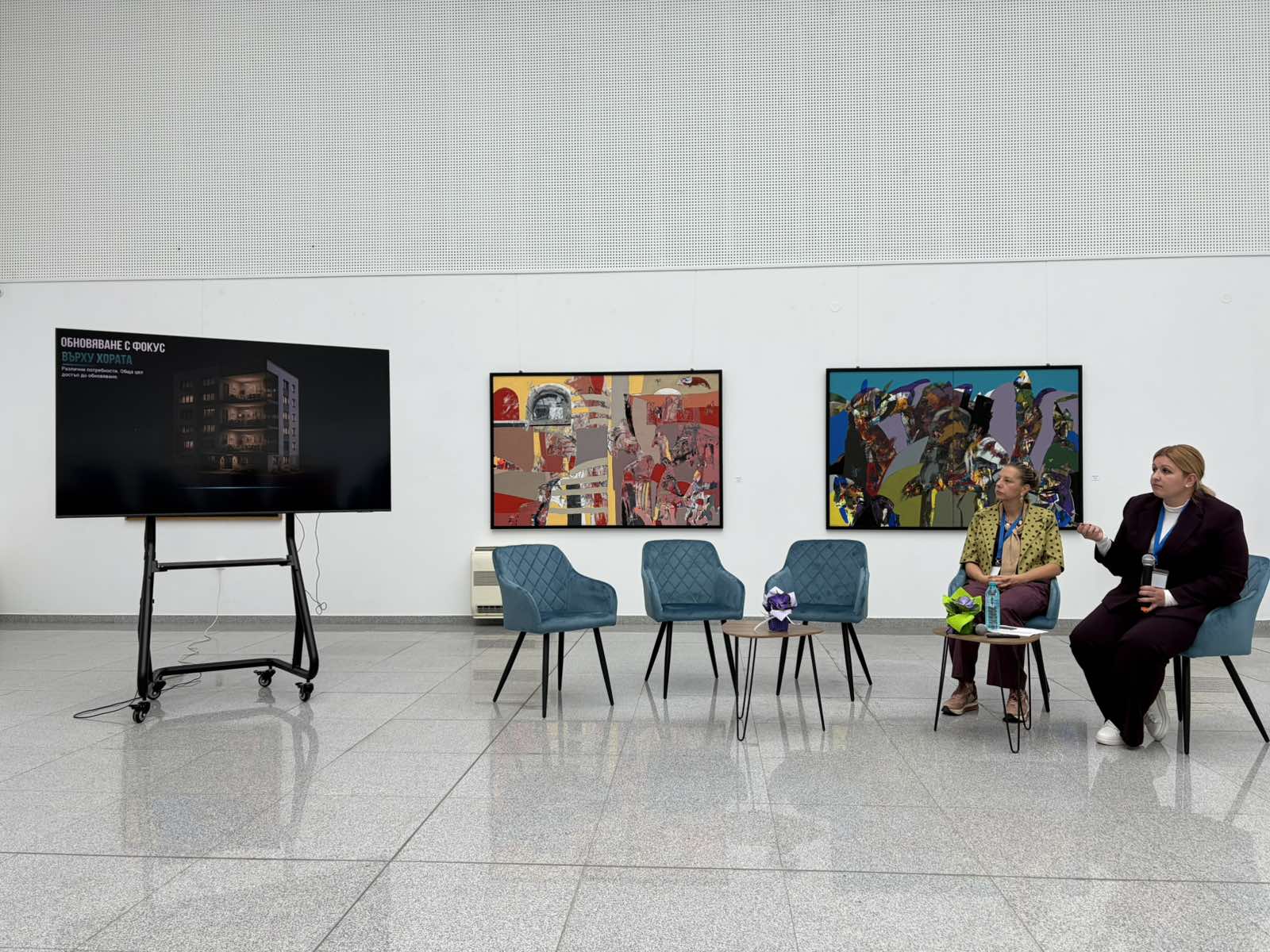
Turning energy renovation into a permanent and predictable process, with affordable support for households and clear quality requirements, is among the leading tasks for housing policy. The focus is on citizens who get better comfort in winter and summer, limiting energy consumption and keeping buildings in good technical condition. Achieving these goals requires concerted action by the state, municipalities, owners and professional participants in the investment process. This is what Silvia Petrova, Director of the Housing Policy Directorate at the Ministry of Regional Development and Public Works (MRDPW), said during her participation in the “Regional Energy Forum Plovdiv 2026”.
Petrova reported that with funding from the National Recovery and Resilience Plan, 454 multi-family residential buildings have been renovated for over 2.2 million square meters of total built-up area, and the projects have been completed and reported. By the end of the year, the remaining residential buildings that have completed renovation work will also be reported. Separately, work continues on the projects that have been transferred for management to the Bulgarian Development Bank. Contracts have been signed for 630 residential buildings with nearly 1.3 million square meters of built-up area, the implementation of which continues until 2029.
As a good example of the effect of building renovation, the Nova Vitosha Block in Svishtov was presented during the forum. With an investment of just over EUR 1 million, thermal insulation measures were implemented on the facades, the roof, the replacement of windows and fire doors and energy-saving lighting in the common areas. The post-implementation assessment confirms a reduction in annual energy demand of nearly 68 % or 802 243 kWh per year and achieves energy class ‘B’. As a result, there is also a decrease in carbon dioxide emissions of 283 tonnes per year.
“The Ministry of Regional Development and Public Works focuses on the consistent preparation of subsequent projects while the current ones are being implemented. The national building renovation plan should provide the long-term framework for the objectives, priorities and coordination of the different support options. Among them are the NRRP, the Just Transition Fund and the measures under the Social Climate Plan under preparation,” Petrova said. He stressed that particular attention is paid to removing financial barriers to households and to supporting people in energy poverty. Opportunities are also being explored to cover the necessary part of co-financing so that it is not borne by citizens. Specific mechanisms and modalities are to be developed according to the capabilities of the relevant instruments.
Silvia Petrova also drew attention to the need to consider energy measures together with the technical condition of the building, structural and fire safety, ventilation and protection from summer overheating. Good inspection and design, construction control and subsequent maintenance are decisive for the longevity of the investment.
The forum entitled “Financing and Policies for Sustainable Energy Renewal in Plovdiv District” is organized by the Energy Agency – Plovdiv, the Regional Administration – Plovdiv and the Municipality of Plovdiv. It focuses on cooperation between national and local authorities, financial institutions, professional organisations and citizens to renovate the building stock.