Annual Meeting of the Danube Strategy Identifies Measures to Improve Connectivity
Annual Meeting of the Danube Strategy Identifies Measures to Improve Connectivity
By Ministry of Regional Development and Public Works
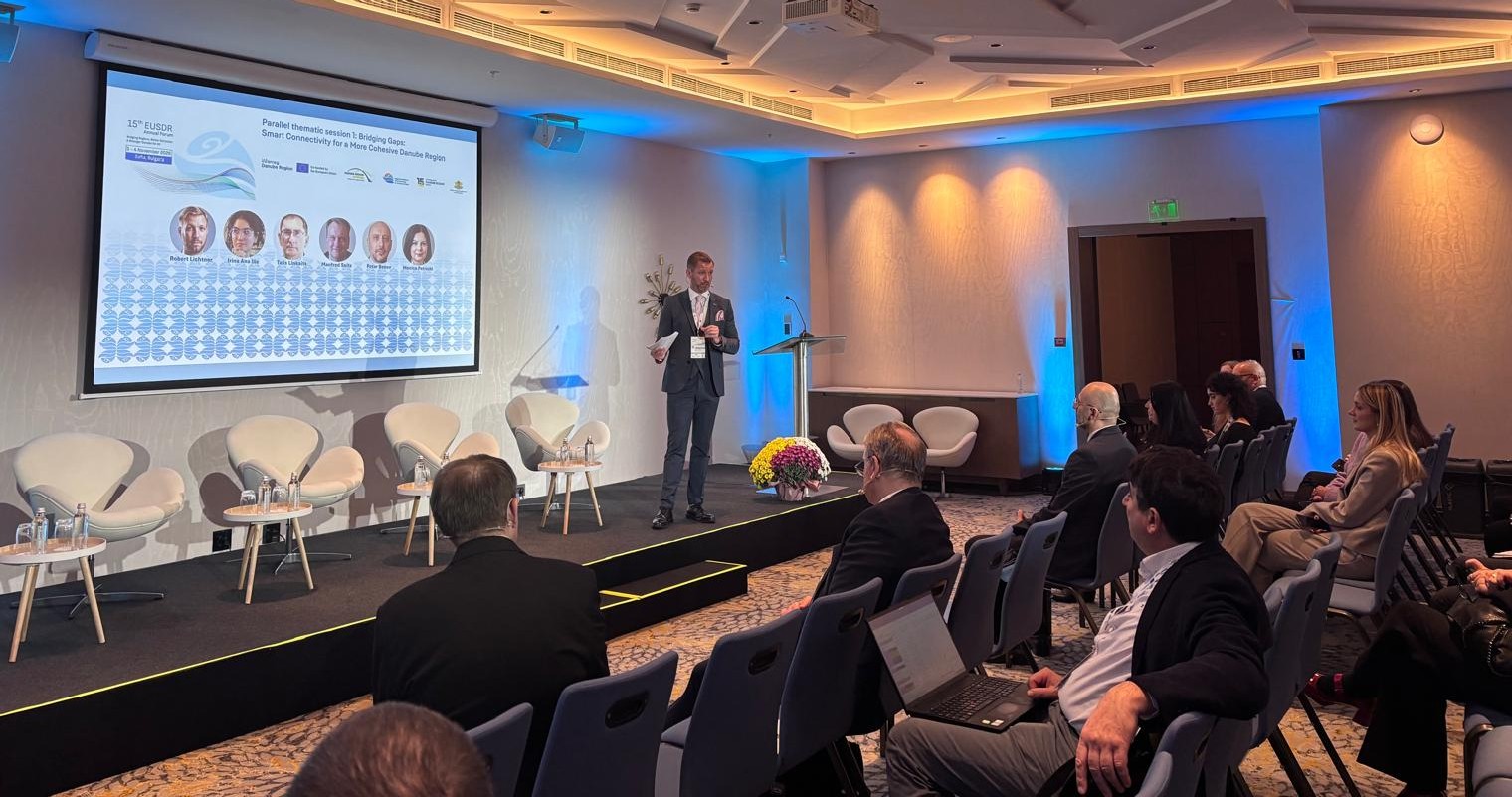
Improving transport connectivity between the regions of the 14 countries participating in the EU Strategy for the Danube Region and reducing disparities through enhanced connectivity were the topics discussed by experts from across the region during a thematic session entitled “Bridging the Gaps: Smart Connectivity for Stronger Cohesion in the Danube Region”. The discussion was part of the 15th Annual Forum of the Strategy, hosted by Bulgaria, with the Ministry of Regional Development and Public Works (MRDPW) acting as the Secretariat of the National Coordination Group for the Strategy.
Participants in the session discussed how integrated transport networks, multimodal connectivity and digital solutions, supported by effective governance and cross-border cooperation, can strengthen territorial cohesion and unlock new opportunities throughout the Danube Region.
The discussion focused on the role of integrated transport networks, multimodal links and digital solutions in reducing disparities between regions and creating new opportunities for economic development.
Participants discussed how the Trans-European Transport Network (TEN-T) and European Transport Corridors can improve the accessibility and competitiveness of regions, not only capital cities but also, with particular emphasis, less developed, border and peripheral areas.
Special attention was paid to the Danube River as a key axis for multimodal transport and to the need for better connections between inland waterways and rail and road infrastructure. Other important topics included transport links between EU Member States and candidate countries, including the alignment of transport networks, standards and systems.
Connectivity was examined in a broader context, encompassing not only transport infrastructure but also digital and institutional connectivity. Emphasis was also placed on the natural link between the Danube and the Black Sea.
The alarming trend of rising temperatures and record-low water levels in the river was highlighted, with such levels now being recorded much earlier in the year, even before the summer season. Studies were also cited indicating that by 2050, the average annual temperature in the Danube Basin could rise by approximately 1.1–1.7 degrees Celsius, while projected warming by the end of the century ranges between 2 and 5 degrees Celsius, with particularly pronounced effects expected in the south-eastern part of the basin.
The thematic panel was moderated by Robert Lichtner, Head of the Danube Strategy Point. The discussion featured Talis Linkaits, Director of the Permanent Secretariat of the Transport Community; Manfred Seitz, Director General of the Secretariat of the Danube Commission; Petar Benov from the National Transport Policy Directorate of the Ministry of Transport and Communications of Bulgaria; and Monica Patrici, Coordinator of Priority Area 1a of the Danube Strategy at the Ministry of Transport and Infrastructure of Romania. The European Commission was represented by Johan Magnusson from the Directorate-General for Regional and Urban Policy (DG REGIO).
Irina Ilie from the Danube Youth Council highlighted the importance of connectivity for the future of young people in the region.
The discussion underscored the importance of coordinated action at European, national and macro-regional levels in building a more integrated, reliable and efficient transport system in the Danube Region.