Marine drones, underwater robots and artificial intelligence technologies support scientists and experts in the study and conservation of the Black Sea
Marine drones, underwater robots and artificial intelligence technologies support scientists and experts in th
By Ministry of Regional Development and Public Works
They are provided with European funding under the Interreg NEXT Black Sea Basin Programme 2021-2027
Marine drones, underwater robots, smart buoys and other advanced technologies assist scientists and experts in the study and conservation of the Black Sea. The state-of-the-art equipment is provided under the Interreg NEXT Program “Black Sea Basin” 2021-2027, whose national management body in Bulgaria is the Ministry of Regional Development and Public Works. The value of the investment for the Bulgarian project partners exceeds EUR 2.5 million.
Within the framework of the “ANEMONE PLUS” project, the Institute of Oceanology at the Bulgarian Academy of Sciences has purchased an underwater drone designed for inspection, monitoring, sampling and measurement in marine waters, as well as for identifying and documenting living objects. The drone operates at depths of up to 350 meters, being extremely maneuverable and stable under strong currents. It has various components and accessories for precise measurements and for underwater mapping. In addition to environmental research, it can be used to explore various underwater sites, including archaeological ones, marine litter pollution on the bottom, habitat mapping and bathymetric research, as well as for underwater inspection of marine vessels. It envisages the use of underwater cameras, remote sensing technologies, passive acoustics, machine learning and modeling for monitoring and observations of the Black Sea. In the implementation of the activities, BAS partners with institutions from Romania, Ukraine and Turkey.
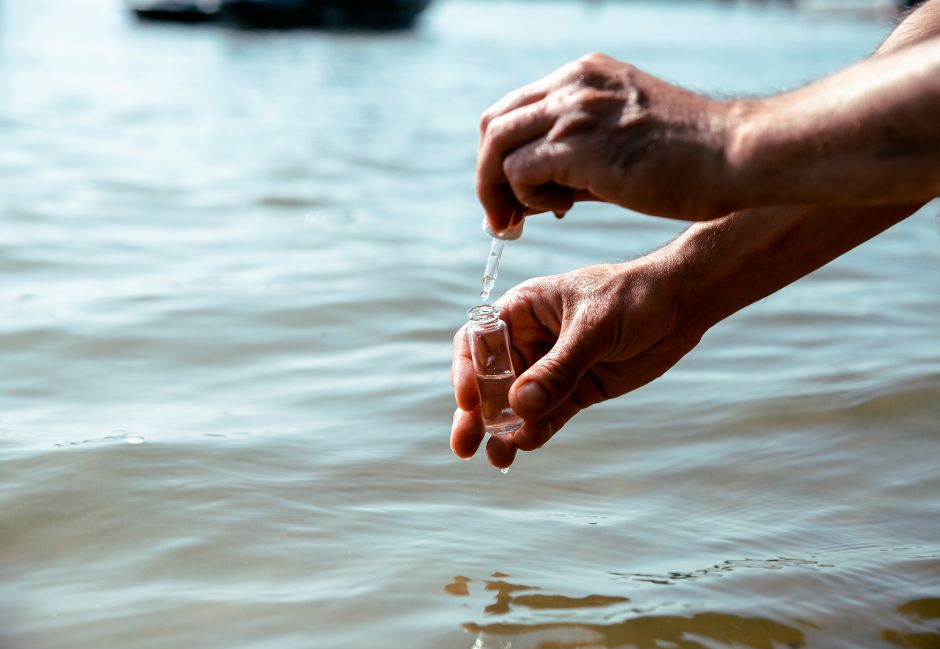
The first two expeditions with the underwater drone have already been carried out in the waters between Cape Galata and the mouth of the Kamchia River, between Cape Kaliakra and Tyulenovo and along the southern Black Sea coast. Representatives of fish fauna, crustaceans, molluscs and casseroles, as well as various habitats in the coastal zone of the Bulgarian waters were observed. Samples have also been collected for eDNA analyses, which will allow the identification of the species present without the use of destructive methods.
With nearly 370,000 euros, the Technical University of Varna and the Association of Black Sea Municipalities are building a network for maritime monitoring with autonomous underwater vehicles (AUVs), remotely controlled underwater vehicles (ROVs) and smart buoys within the framework of the “EfxINNOs” project. Modern appliances will explore life on the bottom of the sea, biodiversity and the impact of human activities on them. The data is processed by machine and artificial intelligence. The project is implemented with partners from Greece, Georgia, Bulgaria, Turkey and Romania, who, based on the findings, will seek common solutions to improve the conservation of ecosystems in the Black and Aegean Seas, where a similar network is also being built.
Under the project “AlgaeRevive”, worth nearly 550,000 euros, the Via Pontica Foundation and Burgas State University bought an underwater robot Deep Trekker. ROV with camera for monitoring and capturing underwater areas. It will be used to monitor algae habitats and monitor the marine ecosystem. The project also includes the integration of other technologies such as a floating water quality monitoring station in Burgas Lake, automated sensors for real-time environmental data collection and artificial intelligence monitoring, combining Copernicus satellite data with on-site measurements to detect and predict algal blooms. In addition, the university examined in a laboratory the samples for the adsorption of heavy metals from algae and evaluated the potential for growing macroalgae. The project is implemented in partnership with organizations from Georgia, Greece, Romania and Ukraine.
Under the “TIMMOD-NEXT 6” project, the Institute of Fish Resources – Varna is establishing a laboratory network in five countries where technological solutions for fisheries and aquaculture will be tested and demonstrated. They will help researchers make reliable assessments of fish stocks and provide information to decision-makers for sustainable fishing. The project will explore and promote the use of autonomous drones, hydroacoustic methods, artificial intelligence, satellite monitoring, intelligent biomass assessment systems, digital tools to support solutions, etc. The implementation of the project will continue until the end of February 2028 and is worth 350,000 euros. The Institute of Fish Resources – Varna cooperates with a total of six organizations from Bulgaria, Romania, Greece, Georgia and Turkey.
A modified water drone, air drone, floating buoys, etc. were delivered under the “LEARN4SEA” project, implemented by the Black Sea Coast Research and Development Association and Shabla Municipality. The technologies investigate the content of microplastics, nitrates and petroleum products in the water, as well as the air quality at the mouth of the Kamchia River and the port of Varna. The project is worth just over 276 thousand euros.
Real-time seawater quality monitors the Institute of Oceanology (IO-BAS) through the BLACKBOX project. FerryBox automatic systems have been deployed on ships on regular service. They are an automatic laboratory that measures water constantly, even while the ship is sailing. The cost of the project is just over 228 thousand euros, and the implementation continues until July 2028.
Another project of the institute – DINO-PATH, whole telemetric tracking of sturgeons. Fish are marked with telemetry devices and released into the wild to map their migration. The data is processed by machine, GIS and a mobile application are developed. The scientists partnered with the Thracian University, which has a special fish farm where sturgeon marking takes place. The third partner – the Institute of Fish Resources, carries out trainings on working with telemetry devices and data on recaptured fish. The cost of the project is nearly 500,000 euros.
Under the WatchReefFish project, IO-BAS performs non-invasive monitoring of reef fish, i.e. they are examined without being caught. From water samples, ecological DNA (eDNA) is analyzed, and artificial intelligence helps to recognize species. Biodiversity in oyster banks in protected and unprotected areas is compared, contributing to reef monitoring, the eDNA database and a digital map. The cost of the project is 140,000 euros. The BlueC project implements mapping of seagrass (algae). GIS and remote sensing investigate the spread of algae and use the Marine Litter Watch app for waste. The assignment is of the Burgas Regional Tourist Association and the value is 147 thousand euros.