Minister Ivan Shishkov: The Danube River Must Become a Driving Force for Regional Development and Connectivity in Europe
Minister Ivan Shishkov: The Danube River Must Become a Driving Force for Regional Development and Connectivity
By Ministry of Regional Development and Public Works
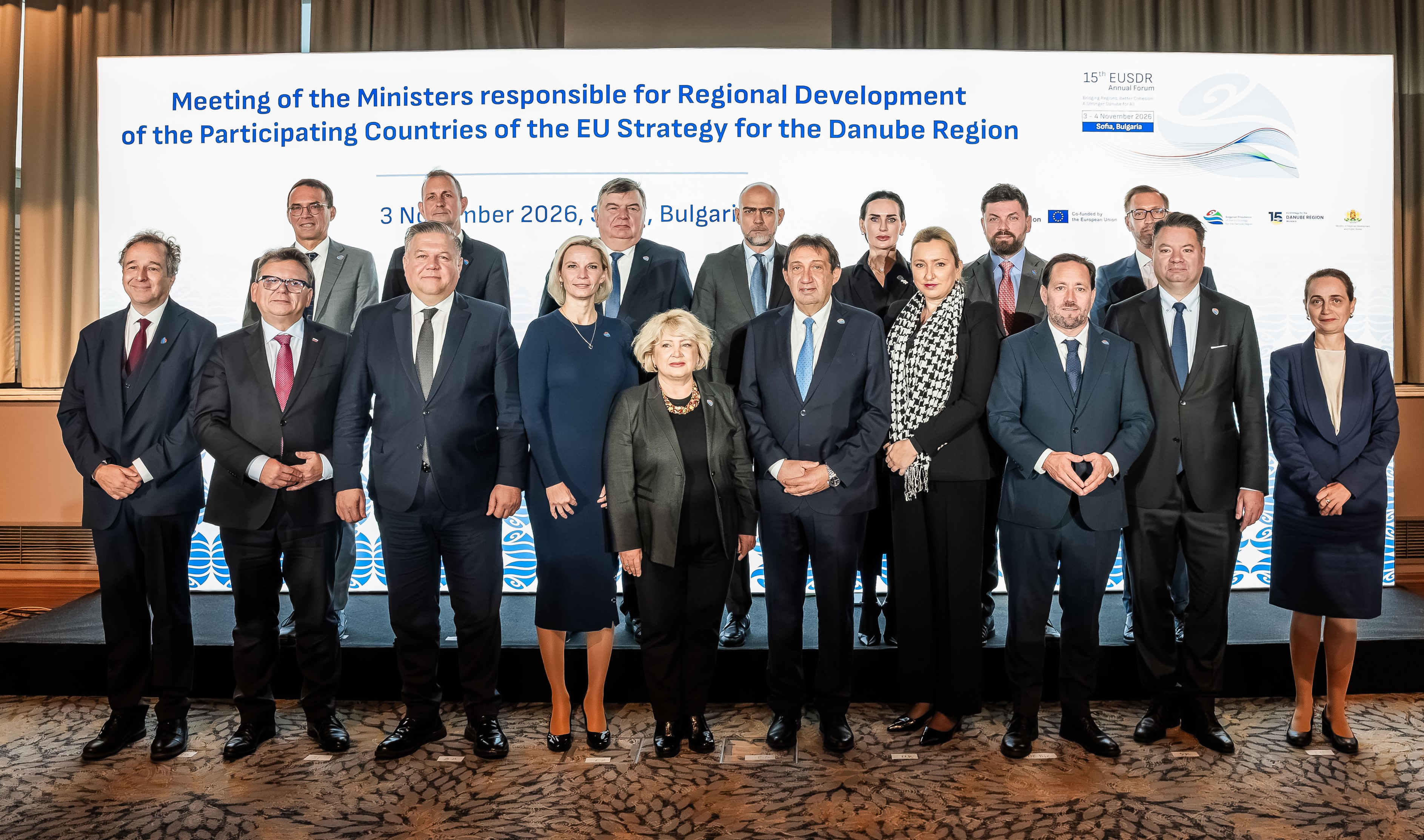


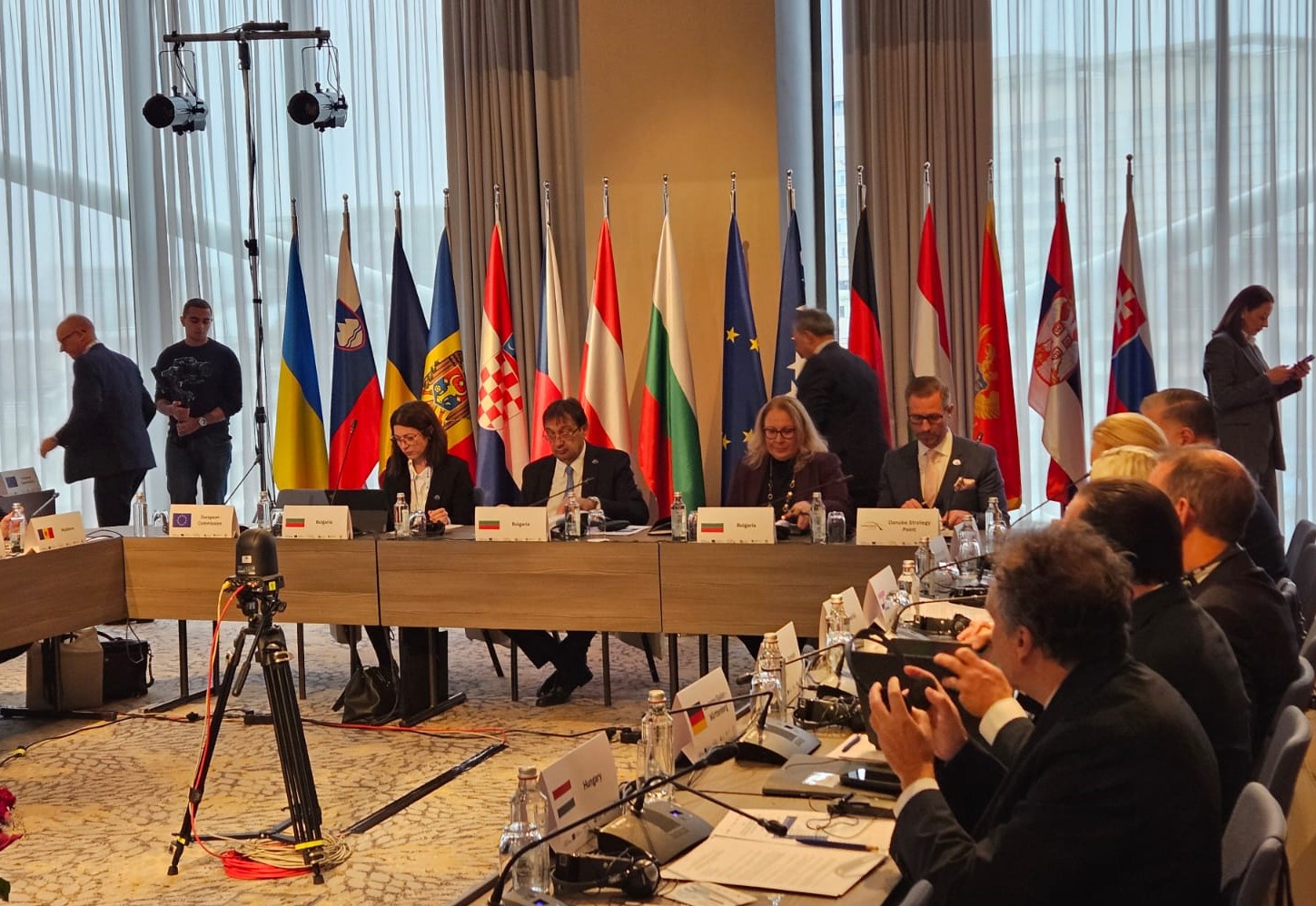


Bulgaria is focusing on reducing regional disparities, improving infrastructure and strengthening cooperation among the countries of the Danube Region
“The Danube River can be much more than a geographical link. It can become a driving force for the development of entire regions. There is still significant potential for developing transport and economic infrastructure, while improved connectivity is particularly important for peripheral and border areas, small towns and territories that have been losing population, economic activity and development opportunities over recent decades.”
This was stated by the Minister of Regional Development and Public Works, arch. Ivan Shishkov, at the official opening of the 15th Annual Forum of the EU Strategy for the Danube Region, which is being held in Sofia.
This year, Bulgaria holds the Presidency of the Danube Strategy, with the Ministry of Regional Development and Public Works serving as the Secretariat of the National Coordination Group for the Strategy.
In his address to the forum participants, the Minister emphasised that the success of the Danube Strategy must be felt in our cities and regions – through better connections, new investments, jobs and opportunities for young people. He also highlighted the shared responsibility of the Danube countries for the protection and sustainable management of the river.
“That is why decisions concerning the use of water resources must take into account the interests of all countries along the river and the consequences they may have for downstream regions,” Shishkov stressed. He was adamant that the Danube River belongs to everyone and that responsibility for its future is shared.
The regional minister also drew attention to the need for cohesion policy to retain its strong role in the next long-term budget of the European Union after 2027. In his words, it is essential for infrastructure development, competitiveness of the regions and support for local economies. “It is also important that macro-regional strategies and territorial cooperation programmes, including Interreg, continue to be part of European policies and investment instruments,” the Minister explained.
“The future European budget must address the need for greater flexibility so that it can take into account the differences and needs of individual regions,” Deputy Prime Minister Atanas Pekanov said at the opening of the forum. For the Danube Region, he noted, this means “investing in connectivity and the development of local economies, as well as in social initiatives that will help us move closer to the top. It also means creating conditions that enable people to see a future where they live, have access to quality jobs, education and social services, and enjoy a genuine choice to stay.”
“Sustainable development and prosperity in the Danube Region are possible only where citizens feel protected,” emphasised Minister of Interior Ivan Demerdzhiev.
This year's Bulgarian Presidency of the EU Strategy for the Danube Region is held under the motto “Connected Regions, Greater Cohesion: A Stronger Danube for All.” Its main priorities include reducing development disparities, improving connectivity and creating more opportunities for regions that have yet to realise their full potential.
Special emphasis is also placed on the link between the Danube and Black Sea regions. According to Minister Shishkov, these two areas complement each other and offer significant opportunities for cooperation in transport, economic development, resilience, security and the management of shared challenges.
“The Danube brings us together. It is up to us to decide what we will build together thanks to this connection,” Arch. Shishkov further stated.
The official opening ceremony was also attended by Deputy Prime Minister Atanas Pekanov, Minister of Interior Ivan Demerdzhiev and Deputy Minister of Tourism prof. Mariela Modeva.
Video addresses to the forum participants were delivered by Raffaele Fitto, Executive Vice-President of the European Commission for Cohesion and Reforms, and Themis Christophidou, Director-General of the European Commission's Directorate-General for Regional and Urban Policy.
Opening remarks were also delivered by Charlina Vitcheva, Director-General of the European Commission's Directorate-General for Maritime Affairs and Fisheries, and Juraj Droba, President of the Bratislava Region and Vice-President of the European Committee of the Regions.
Ms. Yordanka Chobanova, Head of the European Commission Representation in Bulgaria, is also attending the forum.
Earlier today, a meeting of the ministers responsible for regional development in the Danube Region took place as part of the forum. They discussed common priorities and future cooperation in the context of the new European political and financial cycle.
The ministers reached a consensus on the Sofia Declaration on the Danube, which reflects their shared commitment to stronger territorial cohesion, improved connectivity and more effective cooperation in the interests of the entire region.
The 15th Annual Forum continues today and tomorrow with discussions on transport connectivity, people and skills, local economies, climate resilience, security, the role of cities and the future of cohesion policy.